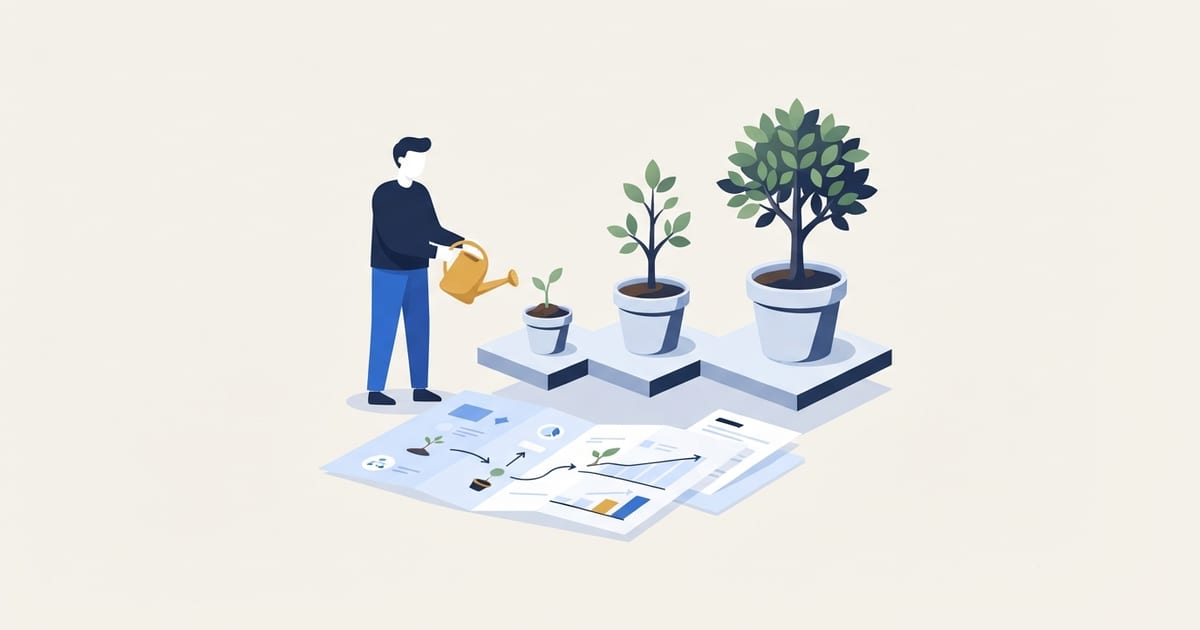
What "Growth" Actually Means for Small Businesses
When most people talk about business growth, they mean revenue. But for small businesses, revenue growth without operational capacity is a recipe for burnout. Real growth means increasing your ability to handle more work consistently, with clarity about what's working and confidence that your operations can support the demand.
Growth is not just about getting more customers. It's about building the capacity to serve them well: repeatable processes, financial visibility, and systems that don't depend on you personally handling every detail. A business that doubles revenue but triples chaos hasn't really grown. It's just busier.
The strategies that actually move small businesses forward aren't glamorous. They're structural. They're about building a foundation that makes growth sustainable instead of stressful.
Why Most Growth Strategies Don't Work
Small business owners are constantly told to try new marketing channels, post more content, run ads, attend networking events. Some of that can help. But when those tactics are layered on top of a business that lacks structure, they create noise instead of progress.
Chasing tactics without systems. If you don't have a system for handling leads, getting more leads just means more fall through the cracks. If your service delivery is inconsistent, more clients means more complaints. Tactics amplify whatever already exists, including the problems.
Lack of operational structure. Growth requires structure. Without documented processes, clear workflows, and defined roles, every new project or client feels like starting from scratch. That's not scalable.
Inconsistent execution. The businesses that grow steadily aren't doing anything revolutionary each week. They're doing the same effective things consistently. Inconsistency, in follow-ups, delivery, communication, erodes trust and kills momentum.
Poor financial visibility. If you don't know your margins, your cash flow patterns, or which services are most profitable, you can't make informed growth decisions. You're guessing. And guessing gets expensive.
Strategy 1: Build Systems Before You Scale
The single most impactful thing a small business can do before trying to grow is build repeatable systems. That means documenting your core workflows, creating templates for recurring tasks, and establishing standard operating procedures for the work your team does every day.
Systems create consistency. They reduce errors. They make it possible to delegate without losing quality. And they're the only way to handle increased volume without proportionally increasing your workload.
If your client onboarding is different every time, if your project delivery depends on whoever happens to be available, if your invoicing process is manual and inconsistent, those are the things to fix first. Not your marketing funnel.
For a deeper look at how to approach this, see our guide on business systems for small business.
Strategy 2: Get Clear on Your Numbers
Financial clarity is a growth strategy. Not in an abstract "know your numbers" way, but in a practical, decision-enabling way. When you can see exactly where money comes in, where it goes, and what your margins look like by service line, you make better decisions.
That means having clean books, reviewing financial reports monthly, and understanding the difference between revenue and profit. It means knowing which clients are most profitable, which services have the best margins, and where you're spending money that isn't generating returns.
Too many small businesses operate on gut feeling when it comes to finances. That works until it doesn't, and by then, the damage is already done. Getting professional bookkeeping support is one of the highest-ROI investments a growing business can make.
Strategy 3: Reduce Manual Work Through Automation
Every hour you spend on repetitive, manual tasks is an hour you're not spending on growth. Automation isn't about replacing people. It's about freeing them from work that doesn't require human judgment.
Data entry, email follow-ups, invoice reminders, status updates, file organization: these are all candidates for automation. Tools like Zapier can connect your existing software and handle the handoffs that currently eat up your team's time.
The key is starting small. Automate one process that costs you the most time, measure the impact, then expand. Over time, you build a stack of automated workflows that compound into significant time savings.
Our automation services help businesses identify and implement these opportunities. For specific tool recommendations, see our guide on workflow automation tools for small business.
Strategy 4: Improve How You Capture and Handle Opportunities
Growth isn't just about generating more opportunities. It's about handling them better. If potential customers reach out and don't hear back for 24 hours, you've likely lost them. If inquiries come in through multiple channels with no central system, things get missed.
Improving your lead handling process means responding faster, routing inquiries to the right person, and following up consistently. For many small businesses, this is the highest-impact change they can make: not more marketing, but better handling of the leads they already get.
Automating the initial response and routing process can make a dramatic difference. A visitor who gets an immediate acknowledgment is far more likely to become a customer than one who waits. Learn more about how to automate customer inquiries without losing the personal touch.
Strategy 5: Fix Bottlenecks in Your Operations
Every business has bottlenecks: points where work slows down, gets stuck, or requires someone specific to move it forward. These bottlenecks cap your growth regardless of how much demand you generate.
Common bottlenecks include: the owner being the approval point for everything, manual handoffs between team members, lack of visibility into project status, and no clear workflow for recurring processes.
Fixing bottlenecks starts with identifying them. Map your core workflows and look for where things consistently slow down. Then ask whether the bottleneck exists because of a process gap, a resource constraint, or a structural problem. Each has a different solution, but all of them are solvable.
The businesses that grow most efficiently aren't the ones working the hardest. They're the ones who've systematically removed the friction from their operations.
Example Scenario
Consider a small marketing agency doing about $30K per month in revenue. The owner handles most client communication, the team uses a mix of spreadsheets and email to track projects, and invoicing happens manually at the end of each month. They have more demand than they can handle, but taking on new clients feels overwhelming because everything depends on the owner.
Here's what changes: They document their project delivery workflow and create templates for each service type. They implement a project management tool with clear stages and ownership. They automate client onboarding emails and invoice generation. They hire a bookkeeper to provide monthly financial reports so the owner can see which services are actually profitable.
Six months later, same team size, but they're handling 40% more clients. The owner is spending less time on operations and more time on strategy. Revenue is up, but more importantly, the business runs without requiring the owner to touch everything. That's real growth.
What Growth Looks Like When It's Done Right
Sustainable growth doesn't feel chaotic. It feels like your business is getting smoother, not just bigger. Here's what it looks like in practice:
Smoother operations. Work flows through defined processes. New projects don't create confusion. Your team knows what to do and when.
Better decision-making. You have the data you need, including financial reports, operational metrics, and client feedback, to make informed choices about where to invest your time and money.
Less chaos. Fewer emergencies, fewer "I forgot about this" moments, fewer things falling through cracks. Systems catch what people miss.
More predictable outcomes. You can forecast revenue, plan capacity, and make commitments with confidence because your business runs consistently.
How Pinstripe Helps Businesses Grow the Right Way
Pinstripe focuses on the operational foundation that makes growth sustainable. We help small businesses build the systems, automation, and financial clarity they need to scale without the chaos.
Our approach starts with understanding where you are today: your workflows, your financial picture, your tools, your pain points. Then we help you build the structure that supports where you want to go. Not with generic advice, but with hands-on implementation.
Explore our full range of services, learn about how we work with clients, or browse the Learning Center for more practical guidance on building a business that grows the right way.
Related Resources
Small Business Operations Stack: The tools and systems that support sustainable growth.
How Business Systems Reduce Owner Workload: Building structures that free you from day-to-day operations.
Fix Messy Financial Records: Getting your books clean so you can make growth decisions with confidence.
Free download, no email required
Job Costing & Pricing Sheet
Work out your true cost per billable hour, your break-even rate, and the price that hits your target margin, then quote a job from it.
How to use it