I didn't start by offering web design as a service. That was never part of the plan. I started by building websites for my own businesses. Constantly Create Shop needed an online store. Eighth Street Designs needed a way to showcase work and take orders. The experience came from real use, not from reading about it or taking a course. Everything I know about how websites work for small businesses came from building them for myself first. You can read more about my background and experience to understand where this perspective comes from.
Where It Started: Shopify and Selling Products
My first real experience building websites was through Shopify. I needed to sell products online, and Shopify made that possible without needing a developer.
There is something powerful about watching someone check out on your website for the first time. You go from selling things in person, at events, or through DMs to suddenly being able to ship products anywhere. That shift changes how you think about your business.
Building Shopify stores taught me what actually matters in ecommerce: clear product pages, simple checkout, and trust. Not flashy animations or complicated layouts.
I Didn't Look for Clients. I Had My Own
For a long time, I wasn't building websites for other people. I was building them for my own businesses. That meant I was the one dealing with broken layouts, slow load times, confusing navigation, and checkout issues.
Every problem I ran into was something I had to fix myself. Every improvement I made was something I could measure in real sales or real inquiries.
That kind of iteration is hard to replicate when you are just building sites for clients. When it is your own business on the line, you pay attention to different things. You treat the website as a work in progress, not a finished product.
Then I Started Building Simple Business Websites
Over time, I realized that not every business needs an online store. A lot of small businesses just need a clean, simple website that explains what they do and gives people a way to get in touch.
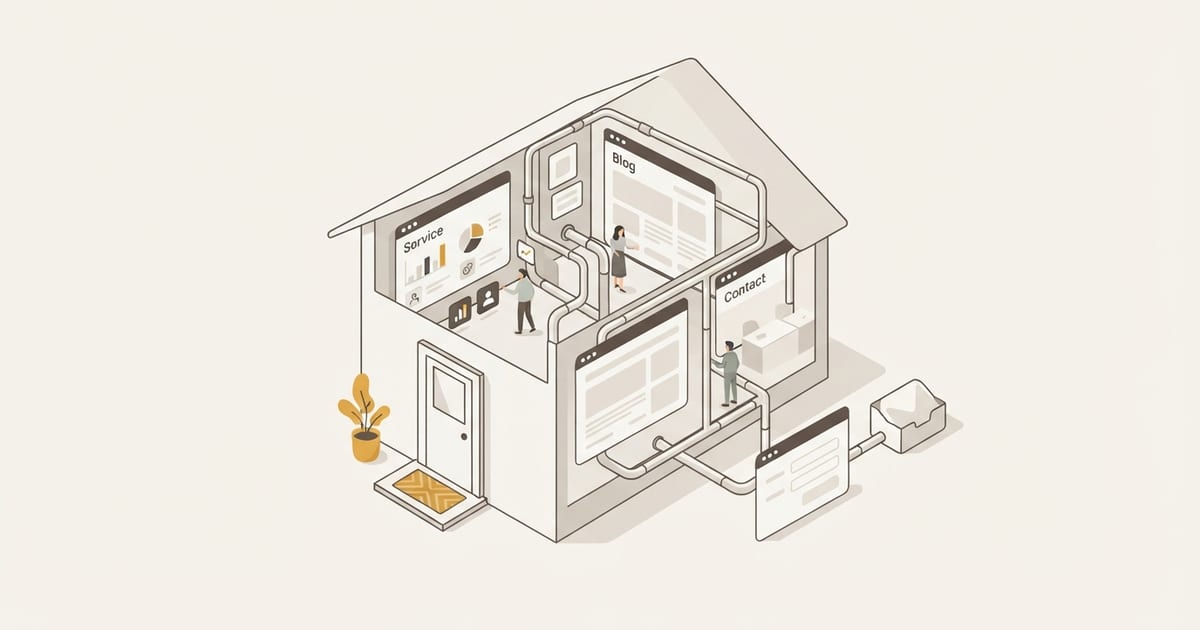
That means a homepage, maybe a blog, and a solid contact page. Nothing more complicated than that. The goal is going from having no online presence to having a clean, structured presence that builds trust.
That is the foundation of the web design services we offer today. Simple, functional websites that actually serve the business.
Some of the Best Websites Are the Simplest
The best-performing small business websites I have built are not the most complex ones. They are the simplest. A clear message, a clean layout, and an easy way to reach out.
Trust matters more than complexity. Structure beats design overload. A well-placed contact form can be just as powerful as a checkout page.
One of the biggest wins for small businesses is centralizing leads. Instead of getting inquiries through five different channels, everything comes through one place. That alone changes how a business operates. You can see real examples of this work in our portfolio.
Where Automation and AI Fit Into Websites
Capturing a lead is only step one. What happens after someone fills out a contact form? Who follows up? How fast? What if it is a weekend?
This is where automation systems start to matter. A website that captures leads but has no system behind it is just collecting names in a spreadsheet.
Tools like AI Chat for Business can help capture inquiries in real time, respond instantly, and keep opportunities organized without requiring someone to be online 24/7.
The website is the front door. Automation is what happens once someone walks through it.
Ecommerce vs Lead Generation: Both Matter
Ecommerce websites generate direct revenue. Someone visits, adds to cart, and checks out. The value is immediate and measurable.
Lead generation websites build a pipeline. Someone visits, learns about your services, and reaches out. The value is in the relationship and the opportunity that follows.
Both models work. Which one is right depends on the business. Some businesses need both. The important thing is understanding what your website is supposed to do before you start building or redesigning it. That is a big part of how we approach projects with every client.
What Actually Matters in a Website
After building websites for years across different businesses and industries, here is what I have learned actually matters:
Clarity. Can someone land on your site and understand what you do within five seconds?
Structure. Is the information organized in a way that makes sense? Can people find what they need?
Usability. Does the site work well on mobile? Is it fast? Are forms easy to fill out?
Trust. Does your website make someone feel confident enough to reach out or buy?
None of those things require flashy design or unnecessary complexity. They require intention and structure.
If Your Website Isn't Helping Your Business
If your website is not generating sales, leads, or trust, it might be time to simplify and rebuild it the right way. Not with more features or fancier design, but with clarity and purpose.
I have helped businesses go from having no online presence to having a website that actually works for them. If you are not sure where to start, I can help you figure it out.