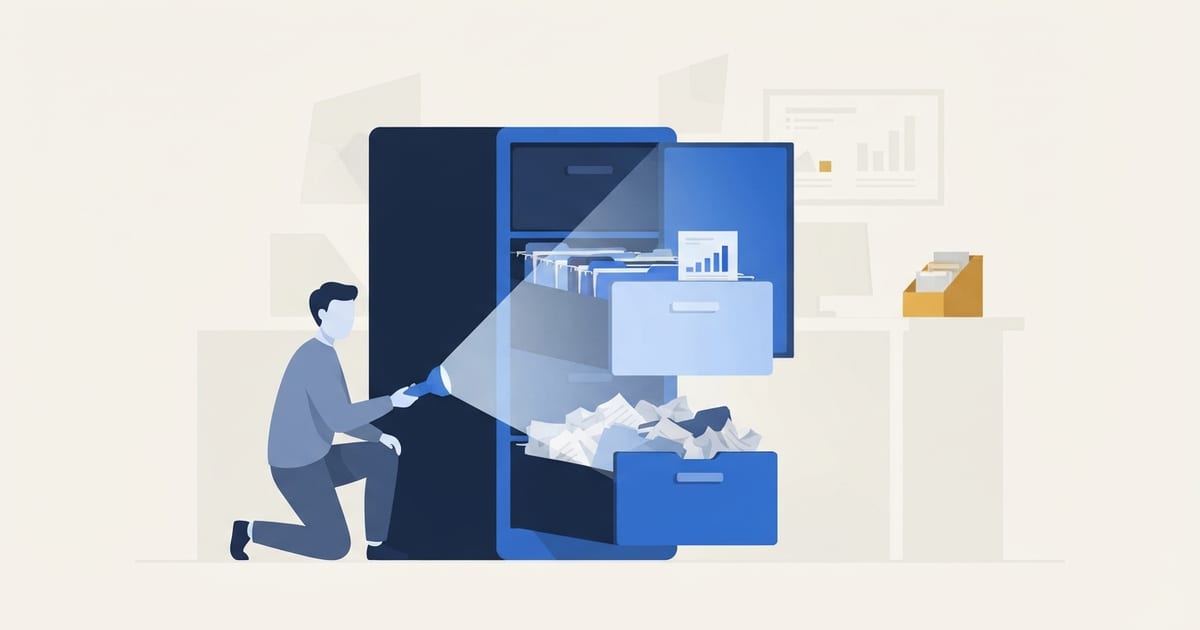
Tax Deadlines Are Here. But the Real Question Is What Your Numbers Are Telling You.
Tax season hits and suddenly every business owner is scrambling. Receipts get dug out of drawers. Bank statements get downloaded for the first time in months. Spreadsheets get updated overnight. The accountant finally gets a call back.
For most small business owners, this is the first time all year they actually sit down and look at their numbers. Not a quick glance at the bank balance. A real look. Income. Expenses. What came in, what went out, and what is left.
Filing your taxes is one thing. Understanding what those numbers mean for your business is something else entirely. And that is the part most people skip.
Tax Season Is a Reality Check
When you finally pull your financials together for your tax return, the picture gets clear fast. Revenue is no longer a rough guess. Expenses are no longer "somewhere around" a certain number. Profit is not what you thought it was.
For a lot of owners, this moment is uncomfortable. You see the gaps. You see the subscriptions that ran all year without being used. You see the cost of materials that went up without your pricing adjusting. You see that one quarter where revenue dropped and you never figured out why.
Tax season does not lie. It puts everything in front of you, whether you were paying attention or not. If you are not already tracking your financial reports regularly, this might be the first honest snapshot you have seen in twelve months.
What Most Business Owners Actually Feel Right Now
Let us be honest about what tax season feels like for most small business owners.
Stress. Not just because taxes are due, but because you are realizing how much you do not know about your own finances. You have been running the business every day, handling customers, managing operations, putting out fires. But when it comes to the actual numbers, there are gaps everywhere.
Confusion. Your accountant asks for documents and you are not sure where half of them are. Categories do not make sense. Some transactions are mixed between personal and business. You are not entirely sure what counts as a deduction and what does not.
Surprise. The tax bill is higher than expected. Or lower, but you have no idea why. Either way, you did not see it coming because you were not watching the numbers all year. This is exactly how small businesses lose track of their numbers in the first place.
The Problem Is Not Taxes
Here is what most people get wrong: they blame taxes. They blame the accountant. They blame the government. But the tax bill is just the result. It is not the cause of anything.
The real issue is what happened during the other eleven months of the year. Disorganized books. Receipts that were never categorized. Revenue that was never reconciled against expenses. No monthly check-in on profit margins. No visibility into cash flow.
When you go the entire year without looking at your finances, tax season becomes the moment of truth. And it is usually not a comfortable one. Most of the stress people feel in April is not because taxes are complicated. It is because the underlying financial data was never maintained. These are the same bookkeeping mistakes that trip up business owners year after year.
What Your Numbers Are Actually Telling You
Your tax return is not just a form. It is a report card on how your business operated for the entire year. If you actually read it, here is what it can tell you:
Where your money is going. Not just the big expenses, but the small recurring ones that add up. Software subscriptions. Contractors you forgot to cancel. Shipping costs that crept up over time.
What is profitable and what is not. If you break your revenue down by service or product line, you can see which parts of your business are actually making money and which ones are costing you. Most owners never do this analysis.
Whether your business is actually healthy. Revenue looks good on the surface, but after expenses, taxes, and owner draws, is there actually anything left? A lot of businesses look busy but are not actually profitable. Your numbers will tell you that straight.
This kind of visibility is not something you get once a year. It is something you should have every single month.
Why This Keeps Happening Every Year
If this sounds familiar, you are not alone. The pattern is predictable:
January through March: ignore the books. April: panic. File an extension or scramble to get everything together. May through December: go right back to ignoring the books.
The reason this cycle repeats is simple. There is no system in place. No one is categorizing transactions weekly. No one is reconciling accounts monthly. The accountant only sees the business once a year, so they are working with whatever gets handed to them.
Without consistent bookkeeping, every tax season will feel the same. Stressful, surprising, and reactive. That is not a tax problem. That is an operations problem.
What Should Happen After Tax Season
Once the return is filed and the dust settles, most business owners exhale and move on. That is the worst thing you can do.
This is the exact moment to make a change. You just saw what a full year of neglected financials looks like. You have the data in front of you. The question is whether you are going to use it or forget about it until next April.
Here is what should happen next:
Set up a system to track finances monthly. Not a spreadsheet you will abandon in three weeks. An actual process where transactions are categorized, accounts are reconciled, and reports are generated on a regular basis.
Understand your reports. A profit and loss statement is not just for your accountant. It is for you. If you cannot read it, learn. If you do not have time, get someone who can walk you through it every month.
Use your numbers to make decisions. Pricing changes, hiring decisions, equipment purchases: all of these should be informed by your financials. Not gut feelings. Not rough estimates. Actual data.
Your business operations should be set up to give you this visibility without you having to dig for it.
Where Bookkeeping Actually Comes In
Bookkeeping is not just data entry. It is the system that keeps your financial records clean, current, and usable throughout the year.
When bookkeeping is handled consistently, your accounts are reconciled on a regular schedule. Your transactions are categorized correctly. Your reports are generated monthly. Your accountant gets clean data when tax season rolls around, and there is no scramble.
More importantly, you have visibility. You can see your cash flow. You can see where money is going. You can catch problems before they become expensive. You can make decisions based on real numbers instead of guesses.
That is the difference between running your business with clarity and running it blind. Professional bookkeeping is what makes that possible.
Tax Season Is Not Just a Deadline
Filing your return is the easy part. The harder part is being honest about what the numbers revealed. Did you know where your business stood before you sat down to do taxes? Did you have a handle on your expenses, your margins, your cash position? Or did April catch you off guard again?
Tax season is a snapshot of how your business is being run. If the picture was not great this year, the question is simple: do you want to see the same thing next year?
The answer is usually no. The follow-through is where most people fall short. But if you put the right systems in place now, next April looks completely different.
Free download, no email required
Year-End Close & 1099 Kit
A November-to-January close timeline, the 1099 rules in plain English, and a vendor tracker that flags who needs a form.
How to use it