Tax Season Just Showed You the Problem
If you spent the last few weeks scrambling to pull together receipts, reconcile transactions, and figure out where your money went, you already know something is broken. And it is not the tax deadline. It is everything that happened between January and December.
This is the same cycle most small business owners go through every single year. The books get ignored. Data piles up. Then tax season hits, and suddenly there is a rush to clean up twelve months of neglect. The fix is not working harder during March. It is building systems that work all year long.
Why Bookkeeping Falls Apart During the Year
It starts small. A few transactions do not get categorized. A receipt gets lost. A bank statement sits unopened. Then weeks go by. Before you know it, months of financial data are sitting in a messy pile waiting for someone to sort through it.
Most business owners do not ignore their books because they do not care. They ignore them because there is no system making it easy to stay current. Without a process, bookkeeping becomes one of those things that always gets pushed to "next week." And next week never comes until the IRS forces the conversation.
Why Manual Processes Always Break
Manual bookkeeping depends entirely on someone remembering to do the work. Every transaction needs to be entered. Every receipt needs to be logged. Every account needs to be reviewed. That is a lot of repetitive, low-value work that competes with actually running the business.
The problem is consistency. When you rely on a person to manually repeat the same steps week after week, things slip. Data entry gets delayed. Categories get mixed up. Reconciliations fall behind. And by the time someone catches the errors, the damage is already compounded across months of records.
This is not a discipline problem. It is a systems problem. Manual processes break because they were never designed to scale with the demands of a growing business.
What Can Actually Be Automated
More than most people realize. The repetitive parts of bookkeeping are exactly the kind of tasks automation handles best.
- Transaction categorization. Bank feeds can be connected to your accounting software so transactions are pulled in and categorized automatically based on rules you set.
- Expense tracking. Digital receipt capture tools can log expenses in real time instead of relying on shoeboxes and spreadsheets.
- Invoice generation. Recurring invoices can be created and sent without manual input every billing cycle.
- Payment reminders. Automated follow-ups on unpaid invoices keep cash flow moving without awkward emails.
- Data syncing. Your bank, accounting software, and payment tools can talk to each other so data flows in one direction without re-entry.
None of this requires complex engineering. It requires the right tools connected properly, which is exactly what a good automation setup looks like.
How Automation Changes the Game
When your bookkeeping runs on automated workflows, your financial records stay current without you thinking about it. Transactions get categorized as they happen. Invoices go out on schedule. Bank data syncs daily.
That means no more end-of-year cleanup marathons. No more guessing where your money went. No more handing your accountant a disorganized mess and hoping they can make sense of it.
The real value is not just saving time. It is having accurate, usable financial data throughout the year. That changes how you make decisions. You can see your margins in real time. You know what is profitable and what is draining resources. You are not running blind anymore.
Where Most Businesses Get It Wrong
Automation is powerful, but it is not magic. And the most common mistake is trying to automate a broken process. If your chart of accounts is a mess, automating transaction categorization just creates organized chaos faster.
Other common mistakes:
- Using too many tools. Five apps that do not talk to each other create more work, not less. If you are interested in how tools connect, check out how small businesses use Zapier for a practical breakdown.
- Overcomplicating simple workflows. Not everything needs a 10-step automation. Sometimes a clean process with one integration does the job.
- Not connecting systems properly. Automation only works when data flows between tools correctly. A half-connected setup is worse than no setup at all.
Before you automate anything, you need to know what actually should be automated and what just needs a cleaner manual process.
What a Simple Setup Actually Looks Like
You do not need an enterprise-grade tech stack. For most small businesses, a functional bookkeeping automation setup looks like this:
- A clean chart of accounts that reflects how your business actually operates
- Bank feeds connected to your accounting software
- Rules-based transaction categorization so most entries sort themselves
- Recurring invoice templates for regular clients
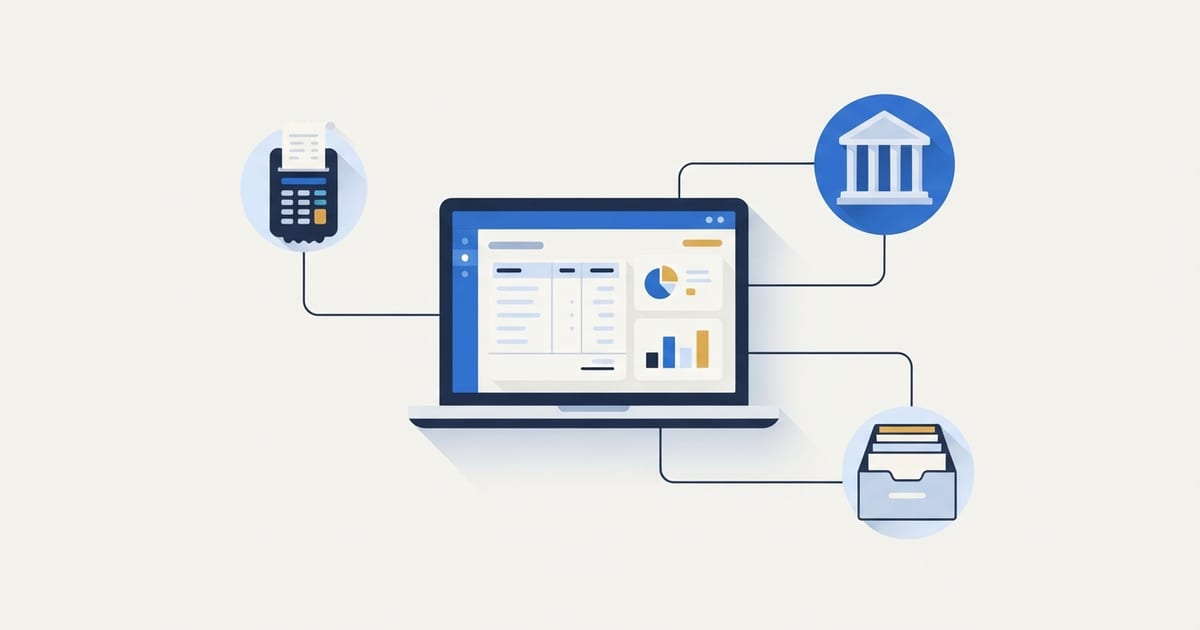
- A single integration layer connecting your payment processor, bank, and books
That is it. The goal is not complexity. It is consistency. A simple, connected setup that runs reliably beats a sophisticated one that nobody maintains.
When done right, this kind of setup saves hours every month. Not in theory. In practice. That is how automation actually saves time for businesses that implement it properly.
Why This Matters Before Next Tax Season
Here is what next tax season looks like when your books are automated: your accountant logs in, sees twelve months of clean, categorized data, and files. No back and forth. No missing receipts. No surprise tax bills because the numbers were wrong all year.
Compare that to what just happened. Weeks of cleanup. Stress about what you might have missed. Uncertainty about whether your deductions are right. That gap between those two experiences is what systems give you.
Clean books also mean you actually understand your numbers. You know your revenue, your margins, your biggest expenses. You are not guessing. You are making decisions based on real data. That is what good bookkeeping looks like in practice.
Where the Right Setup Comes In
The first step is not buying software. It is looking at your current process and identifying what is broken. What takes the most time? Where do things fall through the cracks? What gets skipped?
Once you know that, you simplify. Strip the process down to what actually needs to happen. Then layer in automation to handle the repetitive parts. The goal is a system that runs with minimal input from you while keeping your records accurate and current.
This is not about replacing your accountant or doing everything yourself. It is about giving them clean data to work with and giving yourself visibility into how your business is actually performing. That combination is what makes both our services effective for the businesses we work with.
Stop Repeating the Same Tax Season
Tax season stress is not inevitable. It is the result of twelve months without structure. The businesses that breeze through filing are the ones that built systems during the year. Clean records. Connected tools. Automated workflows.
If you just went through a painful tax season, you have a choice. You can go back to ignoring your books until next March. Or you can fix the process now while the pain is still fresh. The difference between those two decisions is the difference between another stressful year and one where your finances actually make sense.
If you are not sure where to start, reach out. We will look at what you have, identify what is broken, and build a system that keeps your books clean without adding more to your plate.
Free download, no email required
Automation Audit Scorecard
Score your recurring tasks by cost, readiness, and effort to see what to automate first and what to standardize before automating.
How to use it