If People Can't Find You Locally, You Don't Exist
You can have the best service in your area. You can have years of experience, happy clients, and a solid reputation. But if someone searches for what you do in your city and you don't show up, none of that matters to the person searching.
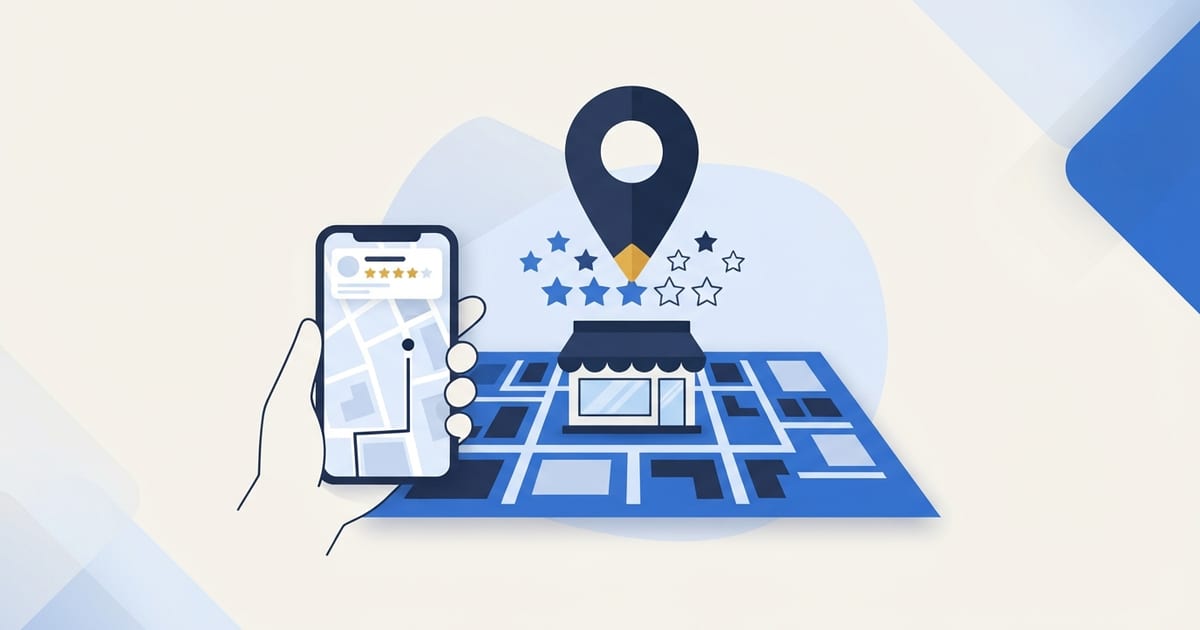
Local SEO is how small businesses get found by people who are actively looking for what they offer, right now, nearby. It's not a marketing luxury. It's the baseline for local visibility in 2026.
What Local SEO Actually Means
Local SEO is the practice of optimizing your online presence so your business appears in location-based search results. That includes:
- Google Maps results: the map pack that appears at the top of local searches
- "Near me" queries: searches like "bookkeeper near me" or "web designer in [city]"
- Local organic results: standard search results filtered by geographic relevance
When someone searches for a service in their area, Google decides which businesses to show based on relevance, distance, and prominence. Local SEO is how you influence all three.
Why Local SEO Matters More Than Ever
Local searches are high-intent. Someone searching "business consultant near me" isn't browsing. They're looking to hire. These are the most valuable searches a small business can appear in because the person is already motivated to take action.
Mobile behavior has accelerated this. Most local searches happen on phones, often while someone is making a decision: choosing a provider, comparing options, or looking for contact information. If you're not visible in that moment, the opportunity goes to whoever is.
The volume of "near me" searches continues to grow year over year. Businesses that invest in local SEO aren't chasing a trend. They're meeting customers where they already are.
Key Elements of Local SEO for Small Businesses
Google Business Profile Optimization
Your Google Business Profile is the single most important factor in local search visibility. It needs to be claimed, verified, and fully completed: business name, address, phone number, hours, categories, description, photos, and services. An incomplete or outdated profile tells Google (and customers) that you're not paying attention.
Consistent Business Information (NAP)
NAP stands for Name, Address, Phone Number. This information needs to be identical everywhere it appears: your website, Google Business Profile, social media, directories, and any other listing. Inconsistencies confuse search engines and erode trust. Even small differences (like "Street" vs "St.") can hurt your rankings.
Local Keywords
Your website content should naturally include the services you offer and the locations you serve. Not keyword stuffing, just clear, honest language. "Bookkeeping services in [city]" on your service page. "Serving small businesses in [region]" in your about section. Google needs to understand where you operate and what you do.
Reviews and Reputation
Reviews are a major ranking factor for local search. The quantity, quality, and recency of your Google reviews directly impact where you appear. Businesses that actively encourage satisfied clients to leave reviews consistently outrank those that don't. Responding to reviews, positive and negative, also signals engagement.
Website Optimization
Your website supports your local SEO by providing the content, structure, and technical signals that Google uses to evaluate relevance. Fast load times, mobile responsiveness, clear service pages, and location-specific content all contribute. A website that's slow, outdated, or poorly structured undermines every other local SEO effort. For a deeper look at building SEO into your website, see our SEO-friendly website design guide.
Your Website Still Matters for Local SEO
Some business owners assume that a Google Business Profile is enough and their website doesn't matter for local rankings. That's not accurate. Google connects your website to your profile and uses your site's content, structure, and authority to determine how prominently you appear.
A well-structured website with clear service pages, location references, and strong technical performance reinforces everything in your Google Business Profile. A poorly built website does the opposite: it signals to Google that your business may not be the best result to show.
If your website hasn't been updated in years, it's likely hurting your local visibility. Learn how a professionally built website supports both conversions and search performance, or see how that connects to building a high-converting small business website.
Common Local SEO Mistakes
- Inconsistent business information: different addresses, phone numbers, or business names across listings
- Outdated website: slow, not mobile-friendly, or missing key content
- No local content: nothing on the site that tells Google where you operate or what areas you serve
- Ignoring reviews: not asking for reviews, not responding to them, or not monitoring what's being said
- Set-and-forget mentality: optimizing once and never updating your profile, content, or listings
Any one of these can significantly limit your local visibility. Combined, they make it nearly impossible to compete in local search results.
Real Scenario
A service business in a mid-size city has been operating for five years. They have a website, but it hasn't been updated since launch. Their Google Business Profile is claimed but incomplete: no photos, generic description, wrong hours. Their business name is slightly different on Yelp than on Google. They have four reviews, all from three years ago. When potential clients search for their service in their city, they don't appear in the first page of results. They assume "SEO doesn't work" for their industry.
A competitor across town has a clean, updated website with dedicated service pages that mention the city and surrounding areas. Their Google Business Profile is fully optimized with current photos, accurate hours, and a compelling description. They ask every satisfied client for a review and respond to each one. They have 47 reviews with a 4.8 rating. They appear in the map pack for every relevant local search. Same service. Same city. Completely different visibility, and completely different lead flow.
How Pinstripe Helps Businesses Improve Local Visibility
At Pinstripe, we build websites that support local search performance from the ground up, not as an afterthought, but as a core part of the design.
- Website structure: clean architecture, fast performance, mobile-first design, and proper technical SEO
- Content: clear service pages, location-relevant copy, and content that helps Google understand what you do and where
- Ongoing systems: the operational structure to maintain your online presence consistently over time
Learn more about our web design services, or see how we work with businesses to build digital presence that lasts. Visit the Learning Center for more on building effective business operations.
Local SEO + Systems = Better Results
Getting found is only half the equation. What happens after someone finds you determines whether visibility turns into revenue.
- Capturing leads: clear contact forms, calls to action, and inquiry systems that make it easy for visitors to reach out
- Responding quickly: automated acknowledgments and routing so no inquiry sits unanswered
- Follow-up: structured processes that turn initial contact into conversations and conversations into clients
Explore how automation services connect your online visibility to real business outcomes. For businesses looking to automate that first layer of customer interaction, AI Chat for Business demonstrates what AI-powered customer communication looks like in practice.
Final Thought
Local visibility isn't optional. It's how customers find you. And in 2026, the businesses that show up in local search are the ones that earn the opportunity to compete. The rest don't even get considered.
Local SEO isn't a one-time project. It's an ongoing investment in making sure that when someone in your area needs what you offer, your business is the one they find. The strategies aren't complicated. The tools are accessible. The only question is whether you'll do the work, or keep being invisible to the people already searching for you.