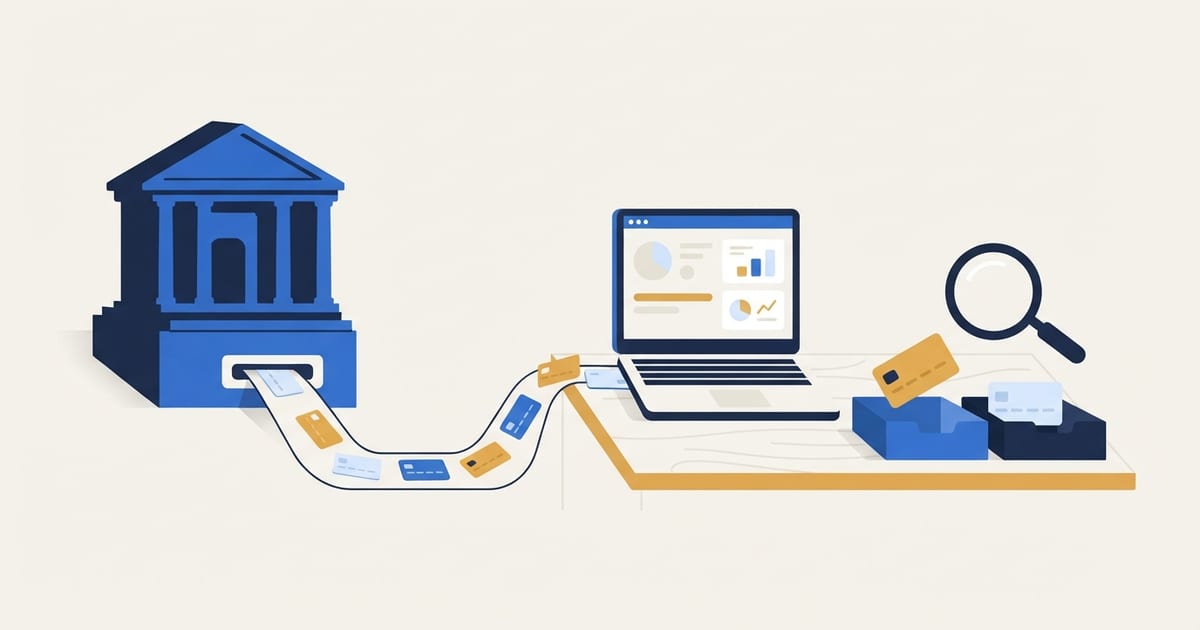
QuickBooks Online makes it easy to feel like the bookkeeping is handled. Connect the bank account, connect the credit card, turn on bank rules, and watch transactions flow in automatically. The dashboard fills up. The numbers look reasonable. The owner moves on.
That is where a lot of small business books quietly start drifting away from reality. Bookkeeping is not data collection. It is verification, categorization, and reconciliation. Software handles the first part well. The other parts still need a human paying attention.
What a lot of owners think bookkeeping is
The most common version of bookkeeping we see in the wild looks like this. Bank feeds are connected. QuickBooks suggests categories based on past behavior. The owner clicks accept on most of the suggestions once a month. A few transactions get matched to invoices. The bank balance in QuickBooks roughly matches the bank balance on the statement. Done.
It feels like bookkeeping. The dashboard shows revenue, expenses, and profit. There are charts. Reports can be generated. From the outside it looks like everything is in order. Then tax season hits, or a loan application comes up, or someone actually digs into the numbers, and the gaps start showing up.
Why auto sync alone is risky
Bank feeds are useful. They are not infallible. The most common problems we find when we open up a set of books that has been on autopilot:
- Duplicate transactions, often from a bank feed disconnecting and reconnecting
- Missing transactions that never imported and nobody caught
- Categorizations that are technically wrong but look right at a glance
- Owner expenses that got booked as business expenses or vice versa
- Payroll entries that are not split correctly between wages, taxes, and benefits
- Sales tax handled in a way that will create a problem at filing time
- Transfers between accounts treated as income or expenses
The software is matching patterns. It does not actually know the business. A meal at a restaurant could be a client lunch, a personal dinner, or a team event. The bank feed cannot tell the difference. The owner can, but only if they are actually looking.
What real bookkeeping verification looks like
Verification is the part most DIY setups skip. It is not complicated, but it is the difference between books that you trust and books that just exist.
It means comparing what is in QuickBooks against the actual bank and credit card statements. Confirming that ending balances match on a specific date. Reviewing every transaction that cleared, not just the ones the software flagged. Catching the ones that did not import. Investigating the ones that look off. That process is reconciliation, and it is what turns a list of imported transactions into actual financial records.
Reconciliation is where problems get caught
A surprising amount of what reconciliation finds has nothing to do with bookkeeping itself. Duplicate charges from vendors. Subscriptions that were supposed to be canceled six months ago. Bank fees that should not be there. Charges that look like fraud. Customer payments that never made it into the system. Owner draws that were never recorded.
None of those show up if you are only accepting bank feed suggestions. They only show up if someone is comparing the books against the actual source documents on a regular cadence. That is the operational layer of bookkeeping that automation does not replace.
Bad books create bigger business problems
Inaccurate books are not just an accounting issue. They show up everywhere downstream. Profit numbers that are wrong by thousands of dollars lead to bad pricing decisions. Cash flow that looks healthier or worse than it actually is leads to bad spending decisions. Tax filings built on shaky data create problems that take real money to clean up later.
Loan applications and lines of credit get a lot harder when the books cannot stand up to a lender's review. Payroll mistakes compound across a year. The owner makes business decisions based on numbers that feel real but are not, and the consequences show up months later when it is harder to trace what went wrong.
Automation should help, not replace oversight
None of this is an argument against automation. Bank feeds save time. AI categorization is genuinely useful. Rules and matching cut down on manual entry. We use these tools constantly because they are good tools.
The point is that they are inputs into a process, not the process itself. Automation reduces the work. It does not remove the responsibility. Good bookkeeping uses every automation tool available and still includes a real human reconciling the accounts on a regular schedule. That is also how we think about automation in general. The tools assist the work. They do not replace the judgment behind it.
Most owners are not lazy. They are busy.
QuickBooks markets simplicity hard. Connect your bank, the rest takes care of itself. That message is everywhere, and it is mostly true for the data import part. The reconciliation and review part is just not part of the marketing because it is less exciting.
Most owners we work with are not avoiding the work on purpose. They genuinely thought the software was handling everything. They are running the business, managing employees, dealing with customers, and trying to grow. Bookkeeping was supposed to be the easy part. When we explain the gap, the response is usually some version of "I had no idea." That is the whole problem.
Why professional bookkeeping actually matters
The point of having a bookkeeper is not just data entry. It is accuracy and accountability. We reconcile accounts every month. We compare records against statements. We flag discrepancies before they become bigger problems. We make sure the categorization actually reflects how the business operates. We talk to the owner when something looks off instead of just accepting whatever the bank feed suggested.
Pinstripe Business Services is a QuickBooks ProAdvisor, which we explain in more detail on our ProAdvisor page. That certification matters less than the actual workflow behind it. The reason we work this way is that we have cleaned up enough sets of books to know what happens when nobody is doing the verification step. It is always more expensive to fix later than to do right the first time.
Across our services, including consulting conversations about how a business is actually performing, we keep coming back to the same point. You cannot make good decisions on bad numbers. How we work is built around making sure the numbers are something you can actually trust.
The takeaway
Bookkeeping is not just importing transactions into software. It is the discipline of making sure those transactions are accurate, complete, and categorized in a way that reflects the real business. Automation handles a lot of the heavy lifting now, which is great. It does not replace the part where someone actually checks the work.
The owners who win on this stuff are not the ones with the fanciest tools. They are the ones whose books they can actually rely on. That is the part worth investing in. Everything else downstream gets easier when the foundation is solid.
Free download, no email required
Year-End Close & 1099 Kit
A November-to-January close timeline, the 1099 rules in plain English, and a vendor tracker that flags who needs a form.
How to use it