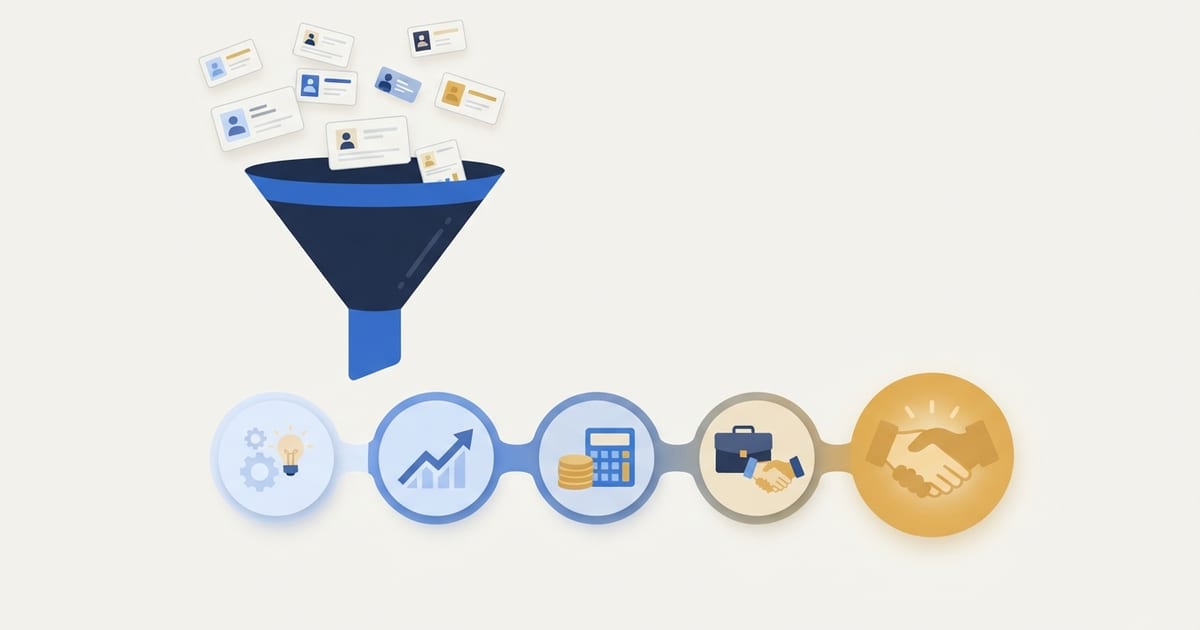
Every Lead Gets a Different Experience. That Is the Problem.
Most small businesses do not have a sales process. They have a reaction. A lead comes in, someone responds when they get a chance, and the conversation goes wherever it goes. Sometimes a deal closes. Sometimes it does not. And there is no clear reason why one worked and the other did not.
That inconsistency is not just frustrating. It is expensive. When every lead is handled differently, your results are unpredictable by design. You cannot improve what you cannot repeat, and you cannot repeat what is not defined.
The fix is not complicated. It is a simple, repeatable process that every inquiry goes through. Same steps, same timing, same structure. That alone changes everything.
What Happens When There Is No Process
Without a defined process, the business runs on improvisation. One lead gets a detailed response within an hour. The next one sits in an inbox for three days. One prospect gets a follow-up call. Another never hears back after the initial quote.
Some deals close because the timing was right or the customer was ready to buy regardless. Others disappear, and the owner assumes they "were not serious." But the truth is, most of those lost deals were serious. They just did not get the experience that moves a buyer forward.
The owner ends up constantly reacting. Chasing leads when they remember, scrambling to respond when something urgent comes in, and never feeling in control of the pipeline. That is not a sales strategy. That is survival mode.
Step 1: Capture Every Lead in One Place
Before you can manage leads, you need to see them. All of them. In one place.
Right now, inquiries are probably coming in through your website contact form, email, phone calls, text messages, Instagram DMs, and Facebook messages. Each one lives in a different app, and some of them get missed entirely. This is one of the biggest reasons small businesses lose leads. The opportunity was real. It just got buried.
Centralization does not require expensive software. It requires a decision. Pick one tool, one inbox, one spreadsheet, whatever works for your business, and make sure every inquiry ends up there. If you are using live chat on your website, make sure those conversations feed into the same system as everything else.
The goal is simple: nothing gets lost.
Step 2: Respond Fast and Consistently
Speed is not optional. Faster response times directly correlate with higher close rates. Every hour you wait, the likelihood of converting that lead drops significantly. Your competitors are one Google search away, and if they respond first, they win.
Your initial response does not need to be a full proposal. It needs to acknowledge the inquiry, show the customer they are dealing with a real business, and set clear expectations for what happens next.
Something like: "Got your message. Here is what I need from you to put together a proper quote. I will have something for you by tomorrow afternoon." That is not robotic. It is professional. And it works because it moves the conversation forward immediately.
If you cannot respond personally within an hour, set up an automated acknowledgment. Even a simple "We received your inquiry and will follow up within 24 hours" keeps the lead warm instead of wondering if their message went into a void.
Step 3: Qualify the Lead
Not every lead deserves the same amount of time. That sounds harsh, but it is practical. A prospect asking for a $500 project and a prospect asking for a $15,000 engagement should not get the same level of effort upfront.
Ask a few key questions early in the conversation:
- What do they actually need?
- What is their timeline?
- Do they have a budget range in mind?
- Have they worked with someone on this before?
These questions take two minutes and save hours. They tell you whether this is a real opportunity, a tire-kicker, or someone who needs a different service entirely. Qualifying early lets you focus your energy where it actually pays off.
Step 4: Move the Lead Forward
Every conversation should end with a clear next step. Not "let me know what you think." Not "I will be in touch." A specific action with a specific timeline.
"I will send you a proposal by Friday." "Let us schedule a 20-minute call for Thursday at 2." "I need these three things from you before I can quote this accurately."
Open-ended conversations die. Defined next steps create momentum. The lead knows what to expect, and you know exactly where every opportunity stands. No guessing, no wondering, no leads sitting in limbo for weeks.
Step 5: Build a Simple Follow-Up System
Most deals do not close on the first interaction. They close on the third, fourth, or fifth. And most small businesses stop at one.
A follow-up system does not need to be complex. It needs to be consistent:
- Day one: initial response and next step defined.
- Day two or three: follow up if no reply.
- Day five to seven: second follow-up with added value or a direct question.
- Day fourteen: final check-in before closing the file.
This can be manual at first. Write it on a whiteboard, put it in a spreadsheet, set calendar reminders. The point is that it happens every time, not just when you remember. Deals that look dead often come back to life with a single well-timed follow-up.
Step 6: Track What Is Happening
If you do not track your leads, you cannot improve your process. And you are probably losing more than you think.
At a minimum, you should know:
- How many inquiries came in this month.
- How many turned into real conversations.
- How many received proposals or quotes.
- How many closed.
- Where the rest dropped off.
That data tells you exactly where your process is breaking. If you are getting plenty of inquiries but few conversations, the problem is response time. If conversations are happening but proposals are not closing, the problem is pricing, positioning, or follow-up. Without tracking, you are guessing. And guessing is how you keep repeating the same mistakes.
Where Automation Fits In
Automation is not a replacement for a good sales process. It is the thing that keeps the process running when you are busy doing everything else.
Automated confirmations ensure every lead gets acknowledged immediately. Automated follow-up sequences ensure nobody falls through the cracks. Automated lead routing ensures the right person sees the inquiry first. The right automation handles the repetitive parts so you can focus on the conversations that actually require your attention.
Keep it simple. You do not need a CRM with 47 features. You need something that captures the lead, triggers the response, and reminds you to follow up. That is it.
Structure Creates Predictability
A good sales process does not make you pushy. It makes you reliable. It means every person who reaches out to your business gets a consistent, professional experience. It means opportunities do not slip through because someone forgot to follow up. It means you can look at your pipeline and know exactly where things stand.
If your current approach is "respond when I can and hope for the best," you are leaving money on the table every single week. The leads are already there. The interest is already there. What is missing is the structure that turns that interest into revenue.
If you want help building a process that fits your business, working with someone who has done this before can shortcut months of trial and error. And putting the right systems in place means you stop losing the deals you already earned.
Free download, no email required
Job Costing & Pricing Sheet
Work out your true cost per billable hour, your break-even rate, and the price that hits your target margin, then quote a job from it.
How to use it