The Problem Might Not Be Your Marketing
When leads are not converting, the first thing most business owners blame is the marketing. The ads are not working. The website is not good enough. The content is not resonating. So they spend more money, try new platforms, hire a new agency, and hope something changes.
Sometimes the marketing really is the issue. But more often, the problem is what happens after the lead comes in. The inquiry sits unanswered for two days. The follow-up never happens. The customer experience is inconsistent. And the business loses the sale before anyone realizes it was there.
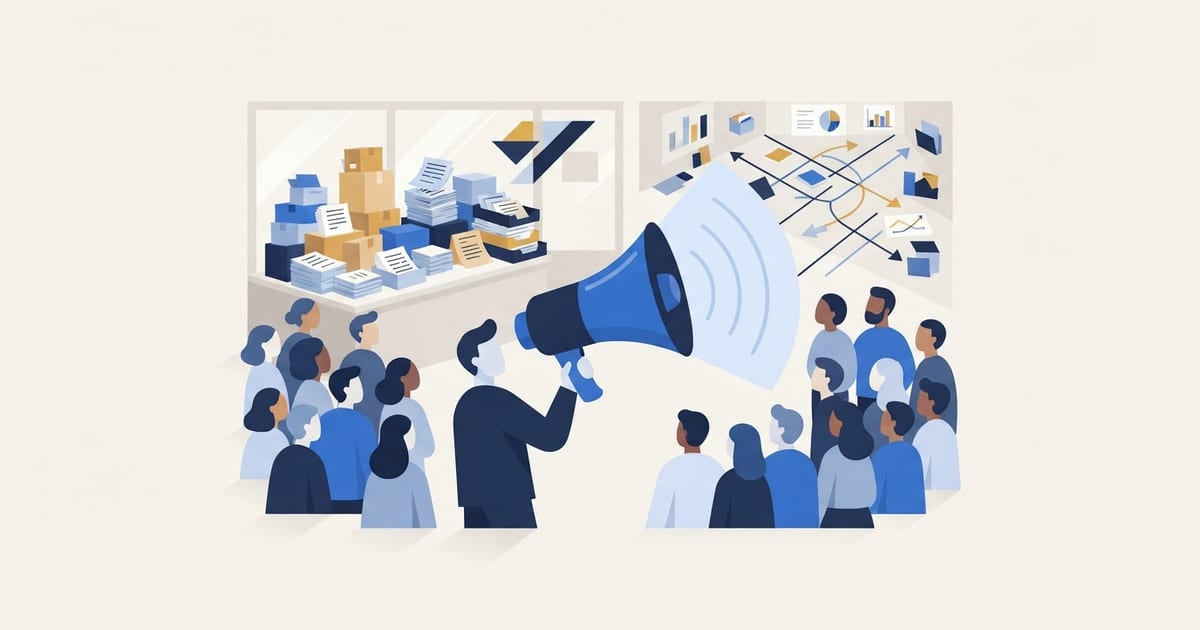
Marketing creates attention. Operations turn that attention into revenue. If the operations side is not set up to handle what marketing brings in, no amount of ad spend will fix the results.
Marketing Brings Attention, Not Results
Marketing does one thing well: it puts your business in front of people. It drives traffic to your website, generates inquiries, fills up your inbox, and gets the phone ringing. That is its job, and when it is working, it does that job reliably.
But marketing does not close the sale. It does not respond to the inquiry. It does not follow up three days later when the customer has not replied. It does not ensure the experience from first contact to payment is smooth and professional.
That is all operations. And if the operational side of the business is not ready to handle the volume that marketing creates, the investment gets wasted. You pay to get people in the door, and then you lose them on the other side.
Where Most Businesses Break After the Lead Comes In
The gap between "lead generated" and "sale closed" is where most small businesses lose money. And the failures are almost always operational.
- Slow response times. A potential customer fills out a contact form or sends a message. They do not hear back for 24 or 48 hours. By then, they have already contacted a competitor who responded in 20 minutes. This is why small businesses miss website leads consistently.
- Missed messages. Inquiries come in through email, social media, website forms, and phone calls. Without a centralized system, some of those messages get buried or forgotten entirely.
- No follow-up process. The first response happens, but there is no system for what comes next. If the customer does not immediately say yes, nobody follows up. The lead goes cold.
- Disorganized communication. The owner responds to one message, a team member responds to another, and nobody knows what was said or promised. The customer feels like they are dealing with a business that does not have its act together.
Poor Systems Kill Good Marketing
You can run the best ad campaign in the world and still lose money if there is no system to handle what comes in. And "system" does not mean expensive software. It means a defined, repeatable process.
Most small businesses do not have a defined sales process. There is no clear path from inquiry to quote to sale. Each lead gets handled differently depending on who picks it up, what day it is, and how busy things are. That inconsistency kills conversion rates.
There is no tracking. Leads come in, some become customers, and the rest disappear. Nobody knows how many inquiries came in last month, how many converted, or where the rest went. Without that visibility, it is impossible to know whether marketing is working or whether the business is just leaking opportunities.
The Cost of Fixing Marketing Before Fixing Operations
When a business owner sees low conversion and increases their marketing budget, they are usually making the problem more expensive, not smaller.
More ad spend with broken operations means more leads that do not convert. Higher volume of inquiries going into the same broken follow-up process. More missed messages, more slow responses, more customers who go somewhere else.
The owner gets frustrated and concludes that "marketing does not work for my business." But marketing was doing its job. The business just was not ready to catch what marketing threw.
Fixing the operational foundation first means that when you do invest in marketing, the return is actually there. Every lead has a better chance of converting because the process behind it is solid.
What Needs to Be in Place Before Scaling Marketing
Before spending more on ads, content, or outreach, these pieces need to be working:
- Fast and consistent response system. Every inquiry should get a response quickly. If that cannot happen manually, a website chatbot or automated acknowledgment can bridge the gap and keep the lead warm.
- Clear follow-up process. What happens after the first response? Who follows up, when, and how? This should not depend on memory. It should be a defined sequence that happens every time.
- Lead tracking. You need to know how many inquiries are coming in, where they are coming from, and what happens to each one. Even a simple spreadsheet is better than nothing.
- Basic automation. Confirmation emails, appointment reminders, follow-up sequences. These are tasks that automation handles efficiently and consistently, without adding to anyone's workload.
- Defined customer journey. From first contact to closed sale, the steps should be clear and repeatable. If every customer has a different experience, conversions will always be inconsistent.
How Operations and Marketing Work Together
Marketing and operations are not separate functions. They are two halves of the same engine. Marketing creates demand. Operations captures and converts it. Neither works well without the other.
A business with great operations and no marketing has capacity but no customers. A business with great marketing and no operations has attention but no conversions. The businesses that grow consistently are the ones where both sides are working together.
When operations are tight, marketing becomes more effective automatically. Response times are fast. Follow-ups are consistent. The customer experience is professional. And conversion rates go up without spending a single extra dollar on ads.
Simple Fixes That Improve Conversion Immediately
You do not need a complete overhaul to see results. A few targeted fixes can make a significant difference in how many leads actually become customers.
- Respond faster. Speed matters more than most owners realize. Faster response times directly correlate with higher conversion rates. Even an automated "we received your message" email buys you time.
- Structure your follow-ups. Create a simple sequence: respond within an hour, follow up at 24 hours if no reply, follow up again at 72 hours. Automate what you can.
- Centralize communication. Pick one place where all customer inquiries land. Stop splitting attention between email, social media DMs, and text messages. Live chat tools can help consolidate incoming conversations.
- Assign clear ownership. Every lead should have one person responsible for it. If nobody owns the follow-up, it will not happen.
Marketing Is Only One Part of Growth
The businesses that convert well are not always the ones with the biggest marketing budgets. They are the ones where the entire process works. Where a lead comes in and gets handled professionally, quickly, and consistently every single time.
If your marketing results are disappointing, take a hard look at what happens after the click. The answer is usually there.
If you are not sure where to start, working with someone who understands both sides can help you identify the gaps. And investing in the right operational support will do more for your conversion rate than doubling your ad budget.
Free download, no email required
Job Costing & Pricing Sheet
Work out your true cost per billable hour, your break-even rate, and the price that hits your target margin, then quote a job from it.
How to use it