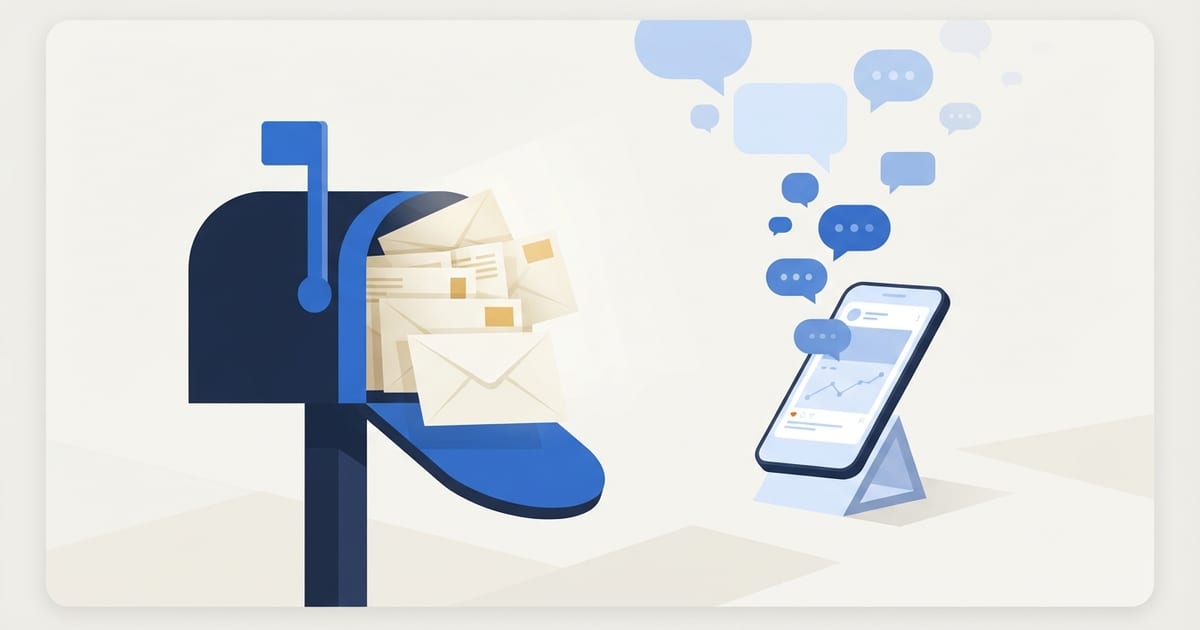
Most small business owners today put almost all of their marketing energy into social media. Instagram posts, TikTok videos, Facebook updates, the occasional Reel. It makes sense on the surface. That is where attention lives. But here is the part that gets ignored: you do not own any of it.
Algorithms shift. Reach drops without warning. Accounts get flagged, locked, or shadow-banned. Organic visibility keeps shrinking, and platforms keep pushing paid ads as the only reliable way to reach the audience you already built. Meanwhile, one of the most consistent marketing tools available to small businesses sits there mostly ignored: the email list.
Your email list is one of the few marketing assets you actually own.
Social Media Is Rented Attention
You do not control Instagram. You do not control TikTok. You do not control Facebook. You are renting space on someone else's platform, and the rent goes up every year.
A platform can change its algorithm tomorrow and your reach drops by 70 percent. Followers do not guarantee visibility. Most of your followers never see your posts. The platforms prioritize ads, paid reach, and whatever engagement metric they care about that quarter. None of that is in your control.
It is not that social media is useless. It works as a top-of-funnel tool to get attention. The problem is treating it as your only marketing channel. If your account disappears tomorrow, what is left?
Why Email Still Works
Email is direct. It lands in an inbox the customer checks. There is no algorithm deciding whether your message is worth showing. The person already raised their hand and said they want to hear from you.
A few practical reasons email still outperforms social for small businesses:
- It is direct communication, not broadcast hope
- The audience already showed interest in your business
- Open rates and visibility beat organic social reach
- It creates consistent, repeat touchpoints
- It drives repeat business and customer retention better than almost anything else
Newsletters are not outdated. Bad newsletters are outdated. There is a difference between sending a thoughtful monthly update to existing customers and blasting a generic promotional email no one asked for.
Small Businesses Underestimate Their Existing Customer List
Most small businesses already have a usable audience and never market to them consistently. Look at what you already have:
- Past customers who bought once and never heard from you again
- Website leads who filled out a form months ago
- Quote requests that never closed
- Walk-in customers
- Existing client databases sitting in QuickBooks, a CRM, or a spreadsheet
That is an audience. The mistake is treating it like dead weight instead of a marketing channel. People who already know you are far more likely to buy again than a cold stranger scrolling Instagram.
Good Web Design and Newsletters Work Together
A newsletter is only as strong as the system feeding it. Your website needs to actually do work. It should capture leads, build trust, present clear calls to action, and make signing up for your list simple and obvious.
If your website is a static brochure with no lead capture, your newsletter has no fuel. We dig into how this fits together inside our web design and automation services, and you can see the broader process in how we work.
Newsletters work best when the website is structured to support them.
What Small Businesses Should Actually Send
This is where most owners freeze. They do not know what to write, so they send nothing. Keep it practical:
- Promotions and seasonal offers
- New services or capabilities
- Seasonal reminders relevant to your industry
- Company updates and changes
- Educational content that helps your customers
- Behind-the-scenes operations
- Customer success stories
- Local or community involvement
You do not need to write a magazine. A short, useful, well-timed email beats a long polished one that never gets sent.
Consistency Matters More Than Perfection
Most small businesses overthink the content and underthink the consistency. They wait until the email is perfect, then never send it. Six months go by. The list goes cold.
A simple, consistent monthly email outperforms a beautifully designed campaign that goes out twice a year. Newsletters are about staying visible and relevant over time, not winning a design award. If you are showing up in someone's inbox every month, you are the business they think of when they need what you sell. That is the whole point.
If consistency is the bigger problem in your operation overall, that usually points to a deeper structural issue. We covered that in why small businesses feel disorganized.
Automation Makes Newsletters Easier Than Most Owners Think
You do not have to manually write and send every email. Automation handles the parts that should not require your time:
- Automated follow-ups after a quote or purchase
- Welcome email sequences for new subscribers
- Lead capture systems that route directly into your list
- Scheduled campaigns that go out on a calendar
- CRM integrations that keep customer data clean and usable
Automation is not about spamming people. It is about removing friction so consistency actually happens. Most of the businesses we work with through automation and consulting already had the tools. They just were not connected. Building the right systems is what makes the difference, and we wrote about that in how to build systems for a small business.
Your Website Should Be Helping You Build an Audience
If your website is just sitting there looking nice, it is not doing its job. A working website should be actively building your list and feeding your business:
- Visible newsletter signup forms
- Clear calls to action on every page
- Landing pages built around specific offers
- Contact flows that capture useful information
- Quote forms that go somewhere
- Lead capture that integrates with your other systems
Your website is a business tool, not a digital brochure. If it is not capturing leads, it is wasting traffic. Browse our services if you want to see how the web design, automation, and consulting pieces fit together.
The Bottom Line
Email newsletters still work because you control the audience directly. No algorithm sits between you and your customers. No platform can take it away overnight. The list is yours.
Small businesses should be focused on building owned marketing channels, not only chasing algorithms that change every quarter. Social media has its place. It is good for awareness and discovery. But the long-term marketing engine for most small businesses is an email list, a website that captures leads, and the automation in between to keep it running without burning out the owner.
Good systems, good web design, and consistent communication create stronger businesses over time. Newsletters are not flashy. They just work.