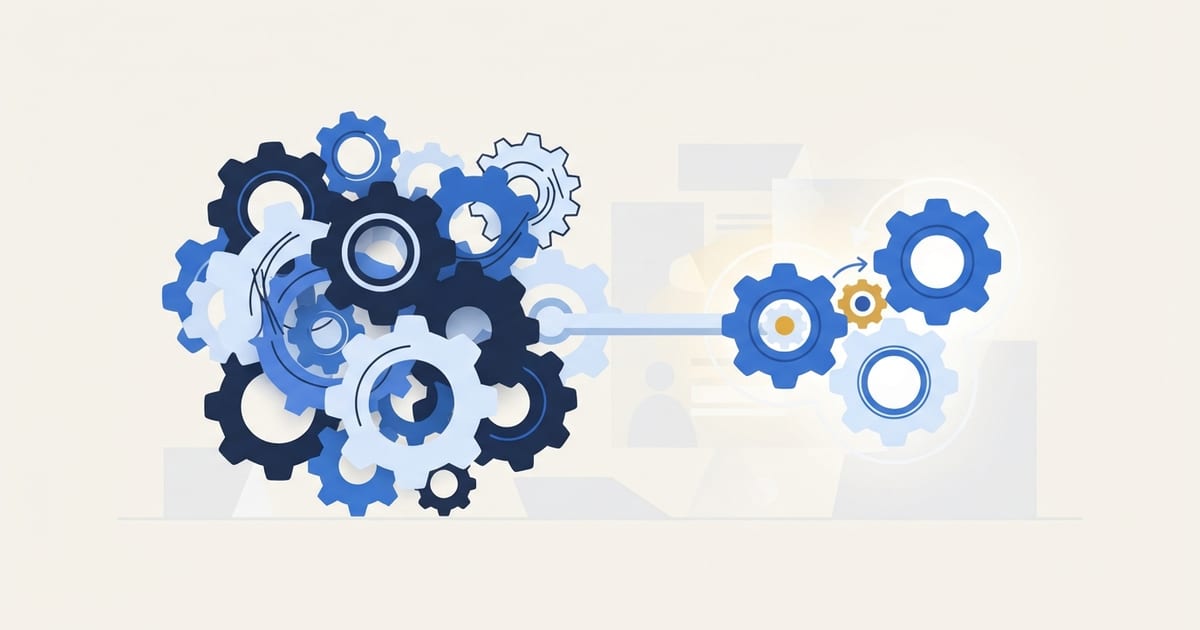
Automation Is Everywhere. That Does Not Mean It Is Working.
Every software company, every productivity influencer, every tech blog is telling small business owners the same thing: automate everything. And most business owners are listening. They are signing up for tools, connecting apps, and building workflows they found in a YouTube tutorial.
The problem is not automation itself. Automation is genuinely powerful when it is set up correctly. The problem is that most small businesses are implementing it without understanding what they are actually automating, why, or whether the underlying process even works. And that gap between intention and execution is where things start costing real money.
Why Business Owners Try to Figure It Out Themselves
It makes sense on the surface. Tools like Zapier, Make, and dozens of others market themselves as no-code, easy-to-use platforms. And they are. The interface is simple. The templates look straightforward. So business owners figure they can handle it without outside help.
There is also the cost factor. Hiring someone to set up automation feels like an unnecessary expense when the tool itself costs $20 a month. Why pay a consultant when you can watch a few videos and do it yourself?
The issue is that knowing how to use a tool is not the same as knowing what to do with it. The tool is not the hard part. The hard part is understanding your own business well enough to know what should be automated, what should be fixed first, and what should stay manual. Most owners cannot see that clearly while they are buried in the day-to-day.
What Goes Wrong Without Proper Guidance
This is where it gets expensive. Not in obvious ways. In quiet, compounding ways that eat into revenue and waste time for months before anyone notices.
Automating broken processes. If your lead follow-up process is inconsistent, automating it does not fix it. It just sends inconsistent messages faster. The process needs to be right before automation touches it.
Incorrect or missing data. Automations that move data between tools only work when the data is clean. Bad inputs create bad outputs at scale. One wrong field mapping can corrupt months of records.
Leads not being captured or followed up properly. This is one of the most common and most costly mistakes. A form submits but the notification does not fire. A lead enters the CRM but nobody is assigned. The automation looks like it is working, but opportunities are falling through the cracks.
Systems not connected correctly. Partial integrations are worse than no integrations. When tools are half-connected, data lives in multiple places, none of them accurate. You end up spending more time reconciling than you would have spent doing the work manually.
These are not hypothetical scenarios. These mistakes can cost thousands of dollars per year in lost revenue and wasted spend. They can also waste hundreds of hours fixing problems that should not exist in the first place.
The Real Problem Is Not the Tool. It Is the System.
Automation is a layer. It sits on top of a process. If the process underneath is unclear, inconsistent, or broken, automation does not improve it. It amplifies the dysfunction.
Most businesses confuse tools with structure. They think buying software creates a system. It does not. A system is the logic behind how work gets done. The tool is just what executes it. Without that logic being defined clearly, you are automating chaos.
This is why two businesses can use the exact same tool and get completely different results. One has a clear workflow underneath. The other is guessing. If you want to understand this better, take a look at what processes actually make sense to automate before touching any tool.
Why Knowing What to Automate Is Not Obvious
Not every task should be automated. Some processes need a human decision at a critical point. Some workflows are so simple that automating them adds complexity without saving time. Some tasks need to be redesigned before automation makes sense.
The challenge is that most business owners cannot see this distinction clearly. When you are inside the business every day, everything feels urgent and everything feels like it could use automation. But urgency is not the same as suitability. Just because something takes time does not mean automation is the answer.
Knowing what to automate requires stepping back and looking at the full picture. Where is time actually being lost? Where are errors happening? Where is revenue being left on the table? Those are the questions that lead to good automation decisions. And they are hard to answer when you are also the person doing the work.
Where Consulting Actually Comes In
This is not about selling a service. It is about explaining what the service actually does, because most people misunderstand it.
Business consulting in this context means someone looks at how your business actually operates. Not how you think it operates. Not how you wish it operated. How it actually runs day to day. Then they identify the real problems. Not the symptoms you are reacting to, but the structural issues causing them.
From there, workflows get mapped out clearly. Decisions get made about what should be automated, what should be simplified, and what should be left alone. This prevents expensive mistakes before they happen. It is the difference between building something that works and building something that looks like it works until it breaks.
What Proper Implementation Looks Like
Good automation implementation is boring. It is not flashy. It does not involve 47 connected apps and a dashboard that looks like mission control. It looks like this:
- Simple, clear workflows that anyone on the team can understand
- Automation supporting the process, not replacing human judgment where it matters
- Systems that connect and communicate properly so data is accurate across tools
- A focus on saving time and protecting revenue, not on using technology for its own sake
The businesses that get the most out of automation are the ones that start with structure. They know exactly what happens at each step of a process before they automate any of it. That is what a proper automation setup delivers.
For a practical example of what this looks like with a specific tool, check out how small businesses actually use Zapier when the implementation is done right.
The Difference Between DIY and Structured Implementation
DIY automation is trial and error. You try something, it kind of works, you tweak it, something else breaks, you fix that, and eventually you have a fragile system held together by workarounds. It runs, but you do not trust it. And you definitely cannot explain it to anyone else.
Structured implementation starts with clarity. The workflow is defined. The automation is built to match. It is tested. It is documented. When something changes in the business, the system can be updated without starting over.
One approach wastes time. The other builds efficiency. The cost difference between the two is not just money. It is the mental energy of constantly wondering if your systems are actually doing what they are supposed to do.
Why This Matters More as a Business Grows
When you are small, inefficiencies are annoying but manageable. You can manually fix mistakes. You can catch dropped leads. You can reconcile messy data because the volume is low enough to handle.
As volume increases, every inefficiency compounds. A 5% error rate on 100 transactions is 5 problems. A 5% error rate on 10,000 transactions is 500 problems. And at that point, you are not fixing issues anymore. You are drowning in them.
Small problems turn into bigger ones. A missed follow-up becomes a pattern of lost revenue. A data entry error becomes a financial reporting issue. A disconnected tool becomes a team-wide bottleneck. The longer these problems run, the more they cost. Building the right business systems early prevents this from spiraling.
Automation Is Powerful. But Only When It Is Done Right.
The risk is not in using automation. It is in using it wrong. It is in assuming the tool will figure out the process for you. It is in skipping the work of understanding your own business before layering technology on top of it.
If your current systems feel fragile, if you are not sure whether your automations are actually working, if you suspect you are losing time or money to bad implementation, those are signs that the foundation needs attention.
The businesses that get automation right are the ones that invest in understanding before they invest in tools. They get the structure right first. Then the automation does what it is supposed to do: save time, reduce errors, and let you focus on growing instead of fixing.
If you are not sure where your systems stand, reach out. We will look at what you have, identify what is working and what is not, and help you build something that actually holds up as your business grows. That is what our full range of services is designed to do.
Free download, no email required
Automation Audit Scorecard
Score your recurring tasks by cost, readiness, and effort to see what to automate first and what to standardize before automating.
How to use it