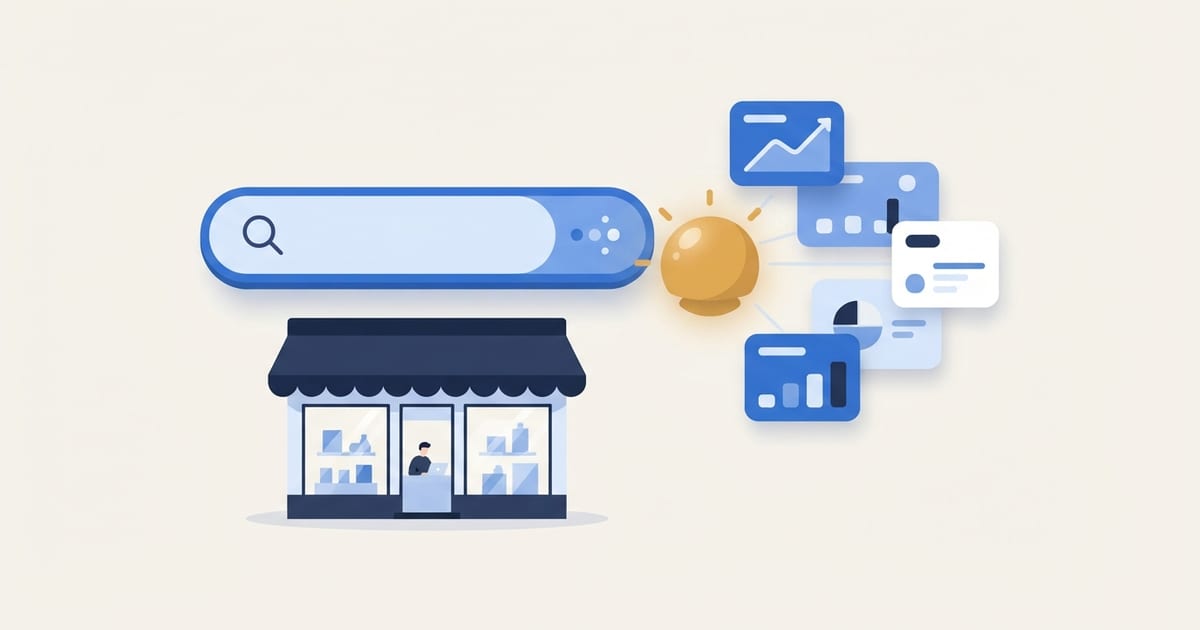
Google has continued rolling out AI-powered search experiences. AI Overviews. AI Mode. Conversational answers that summarize the web before a user ever clicks a link. Every time one of these updates lands, the same three questions hit my inbox from small business owners:
Is SEO still worth it? Will AI replace Google? Should I stop writing blog posts?
Short version: search is changing, visibility still matters, and the businesses that adapt early are the ones that will benefit. Let's break down what's actually happening and what to do about it.
Search Is Evolving, Not Disappearing
Traditional Google results still exist. AI Overviews sit on top of them. AI Mode gives users a chat-style experience inside Google. Meanwhile ChatGPT, Perplexity, and Gemini are pulling more of the "I have a question" traffic that used to start with a Google search bar.
People are still searching. They're just searching in more places, and they expect answers faster. Google's own AI features keep expanding, and overall search volume across these tools is going up, not down. The playing field is bigger. That's the real story.
What This Means for Small Businesses
Customers still need local bookkeepers, consultants, contractors, and shops. They still compare companies before they call. They still research services before they spend money. None of that changed.
What changed is where that research happens. Someone might ask ChatGPT for a Brooklyn bookkeeper, check AI Overviews for reviews, then land on your Google Business Profile before they ever hit your homepage. Visibility now extends well beyond ten blue links. If your business only shows up in one of those places, you're invisible in the other four.
Why Random SEO Tactics Matter Less Than Ever
Keyword stuffing. Buying backlinks. Thin AI-generated articles cranked out by the hundred. Publishing without a plan. Dozens of disconnected blog posts that don't link to anything and don't say anything.
Search engines have been getting better at ignoring this stuff for years. AI systems are even less tolerant of it. When an AI model decides which sources to cite in an answer, it's looking for structure, consistency, and depth. Ten shallow posts about "top 5 tips" don't compete with one page that actually explains a topic and connects to the rest of your site in a logical way.
The shortcuts stopped working. That's not a bad thing.
The New Competitive Advantage
What's replacing the tricks is boring, honest, and effective:
- Topic clusters that group related content together
- Internal linking that actually helps people navigate
- Helpful content written for a specific reader, not a keyword
- Entity authority, meaning your business is clearly known for a defined set of services
- Website structure that a person and a crawler can both follow
- Clear service pages that answer real questions
- Real expertise, demonstrated over time
Businesses that organize information well end up in AI answers, featured snippets, and traditional rankings at the same time. One investment. Multiple channels.
Your Website Matters More Than Ever
A lot of business owners assumed AI search would make websites less important. It's doing the opposite. AI models cite websites. Google ranks websites. Customers still land on websites before they buy. The website is the source of truth that every other channel points to.
Which means the fundamentals matter:
- Load speed, especially on mobile
- A mobile experience that doesn't feel like a punishment
- Internal links that connect related pages
- Navigation that gets someone to your services in one or two clicks
- Structured service pages, not one long "about us" wall of text
- Educational content that answers the questions your customers already ask you
If your website is slow, disorganized, or missing content that supports your services, no amount of SEO work on top of it will move the needle. And if you're still doing everything manually behind the scenes, automation is what frees up the time to actually publish, update, and improve.
Why Business Owners Should Stop Chasing SEO Hacks
Every major search update creates the same cycle. Panic on LinkedIn. Twenty new "secret ranking tricks" from people who've never run a business. Threads full of contradictory advice. Then six months later everyone forgets and moves on to the next update.
Here's what I've watched over and over again: the businesses that consistently publish useful content, keep their sites clean, and treat their website like an operational asset outperform the businesses chasing shortcuts. Every single time. It's not close.
The reason is simple. Algorithms change constantly. Fundamentals don't. A page that clearly explains a service, links to related pages, and reflects real expertise wins in traditional search, AI Overviews, and ChatGPT answers. A page built to game one algorithm wins in none of them once that algorithm shifts.
Stop chasing the hack. Build the asset.
This Is Why Strategy Beats Tactics
The way we think about this at Pinstripe is operational, not tactical. We don't build websites for this month's algorithm. We build websites that keep earning authority as search evolves.
That means:
- Content planning tied to your services and your customers' real questions
- Internal linking that reinforces the topics you want to be known for
- Operational systems so publishing and updating actually happens on schedule
- AI visibility work, which is close cousin to traditional SEO but shaped for how AI models pick sources
- AEO, answering the specific questions customers ask in the way AI systems can lift and cite
- Traditional SEO, still very much alive and still driving traffic
If you want a partner who's doing this in real time, that's what our consulting and web design work covers. You can see how we work for the full picture.
What Small Businesses Should Be Doing Right Now
Practical action items you can start on this month:
- Review your website structure. Can a new visitor find your main services in two clicks?
- Publish genuinely useful content, even if it's only one solid piece a month
- Improve internal linking between your service pages and your blog
- Build topical authority by going deep on a small number of subjects instead of shallow on many
- Keep business information current across your site, Google Business Profile, and directories
- Think beyond Google rankings. Track brand mentions, AI citations, and referral sources
If you're not sure where to start, our guides on building systems for a small business and why small businesses feel disorganized are a good primer. The goal is simple: become the obvious authority in your niche. That's what wins in every version of search, current and future.
The Bottom Line
AI is changing how people search. It's not eliminating the need to be found. Businesses with strong websites, useful content, and organized systems are the ones showing up in AI answers, holding their Google rankings, and getting cited when a customer asks an AI model for a recommendation.
Stop chasing every algorithm update. Build long-term authority instead. The businesses that adapt thoughtfully today are the ones that will have an unfair advantage tomorrow. Search will keep evolving. Good content, clear structure, and real expertise will keep winning.
If you want help getting your site, content, and systems pointed in that direction, take a look at our services or reach out. We're actively working in SEO, AEO, and AI search every day. This is the environment we build for.